
June 11, 2021
When you suffer long enough, your sense of humor changes.
It doesn’t get louder.
It gets darker.
People say humor is a coping mechanism. They say it like it’s a trick. Like you’re dodging pain. Like you’re avoiding reality.
But when suffering doesn’t leave, humor isn’t avoidance.
It’s adaptation.
At first, you joke to make other people comfortable.
When I was diagnosed, I’d say something sharp before anyone could look at me with pity. I learned quickly that most people don’t know what to do with long-term illness. So I made it easier for them. I turned it into something they could laugh at.
That wasn’t courage.
That was management.
But when something stays with you for twenty years, something shifts.
It’s not a bad week.
Not a rough season.
Not something you “beat.”
It’s there when you wake up.
It’s there when you train.
It’s there when you’re teaching.
I was teaching a Day 1 student how to escape mount.
Basic bridge and trap. First survival lesson.
I was on top. He bridges. I show him how to post and balance.
What no one in the room knew was that my balance had been off for the last fifteen minutes. Not tired. Not sloppy.
Neurological.
The kind where you know something isn’t firing right, but you keep going anyway. Because what am I going to do? Stop class and explain spinal cord pathology before a mount escape drill?
So I kept teaching.
He bridges again.
I go to post.
I misjudge it by an inch.
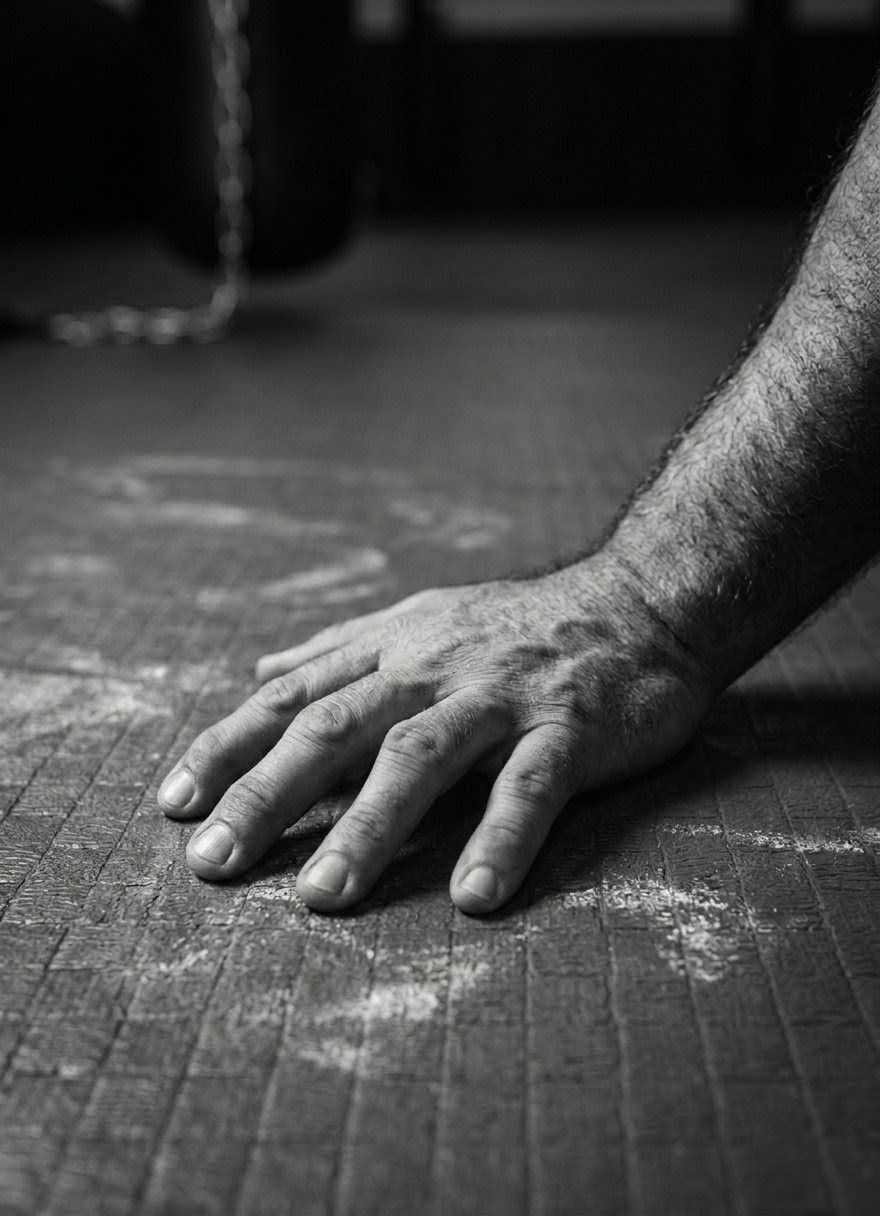
That inch dislocated my ring finger so badly I will never wear my wedding ring again.
Not in a tournament.
Not in a superfight.
Not in some dramatic moment that makes sense.
Day 1 mount escapes.
In the middle of helping someone learn how not to get crushed.
And I laughed.
Not because it was funny.
Because of course it happened like that.
That’s where dark humor comes from.
When you stop expecting fairness.
When you stop expecting suffering to at least be meaningful.
When you realize timing doesn’t care about symbolism.
Now when people ask about my finger, I tell them I sacrificed it for proper mount defense.
They laugh.
I laugh.
Underneath that laugh is the understanding that this is how I stay in the room. How I stay on the mat. How I keep teaching.
Dark humor isn’t denial.
It’s what’s left when denial burns off.
It’s not that I don’t take this seriously.
It’s that I’ve taken it seriously for twenty years.
At some point, you stop trying to make it inspirational.
You stop trying to make it tragic.
You just see it clearly.
And sometimes the cleanest response to something brutal
is a quiet, dark joke.
Leave a Reply